

As people's safety awareness continues to rise, there's an increasing demand for moisture-proof and fire-proof properties in various electrical appliances and electronic components. As a socket specifically designed to match power supplies for computer monitors, DC sockets are very common in our daily lives. So, how can we scientifically evaluate the waterproof performance of DC sockets and their inherent quality? This article will provide a detailed explanation.
I. Standards for Assessing DC Socket Waterproof Performance: IP Rating
The waterproof performance of DC sockets, like other electronic products, generally adopts the internationally recognized IP Protection Rating standard (Ingress Protection Rating). This standard uses two digits to indicate the device's protection capability, namely IPXX.
• First Digit (X): Represents the device's dust protection level. It ranges from 0 to 6, with higher numbers indicating stronger dust protection. The highest level is 6, meaning complete protection against dust ingress.
• Second Digit (X): Represents the device's water protection level. It ranges from 0 to 8, with higher numbers indicating stronger water protection. For waterproof DC sockets, the highest waterproof rating can reach level 8, meaning the device can be continuously immersed in a certain depth of water without damage.
Therefore, when choosing a waterproof DC socket, focus on the second digit in its IP rating to ensure it meets the required waterproof performance.
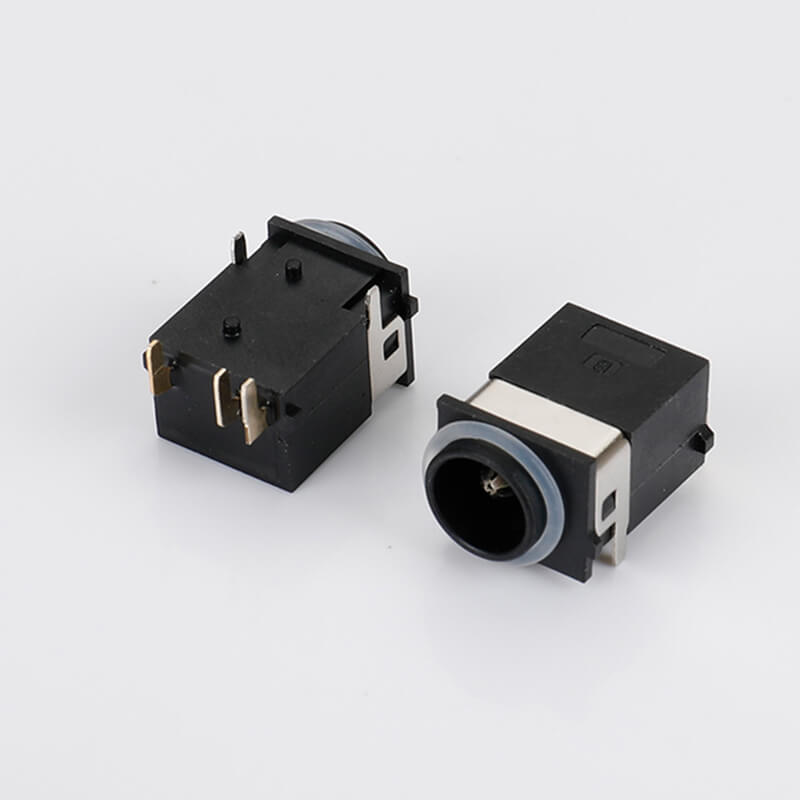
II. The Key to DC Socket Quality: Identifying Copper Contacts
When purchasing DC sockets, we generally hope to buy a durable and high-quality product. For switches and sockets, the quality of their internal copper contacts directly determines the overall quality and lifespan of the product. Here are several key points for identifying the quality of copper contacts in switches and sockets:
1. Material Selection:
The material of the copper contact is a core factor determining its performance. In the past, pure copper was mainly used, with purple copper having the best performance, followed by red copper, and yellow copper being the worst. However, due to the limitations of pure copper's oxidation resistance, copper alloys are now more commonly used. Common copper alloys include copper-cadmium alloy, copper-nickel alloy, and tin-copper alloy. Currently, tin-phosphor bronze alloy offers the best performance, excelling in conductivity, elasticity, and oxidation resistance.
2. Length of Copper Contacts:
Under the same material conditions, longer copper contacts are better. The length of the copper contact directly affects the spacing between socket holes. Wider hole spacing makes it more convenient to insert two or three plugs simultaneously, avoiding the awkwardness of not being able to use them all at once due to insufficient space. Many old-style sockets had short copper contacts, leading to narrow hole spacing, which could not meet the demand for multiple plugs to be used simultaneously.
3. Thickness of Copper Contacts:
The thickness of the copper contact is closely related to the socket's lifespan. Generally, thicker copper contacts have better elasticity, meaning that after multiple insertions and removals of plugs, the copper contacts can still maintain good clamping force, ensuring stable contact, thereby significantly extending the socket's lifespan.
4. Forming Method:
The forming method of copper contacts has a significant impact on their performance and safety. Old-style riveted copper contacts can often clearly show that the materials at both ends are completely different from the material in the middle bridge, and there are obvious riveting points. In contrast, one-piece formed copper contacts have lower resistance, generate less heat, have better elasticity, higher safety factor, and higher conductivity. This integrated forming process avoids potential poor contact and heating issues that might arise from riveting points.
5. Contact Method:
The contact method between the socket's copper contacts and the plug's conductive blades mainly falls into two types: point contact and surface contact.
• Point contact: The contact area is small, prone to sparks, and the copper contacts are more likely to loosen during long-term use, posing certain safety hazards.
• Surface contact: The contact area is large, and its conductivity and safety are much higher than point contact. It provides more stable and reliable current transmission, effectively avoiding spark generation and loosening of copper contacts, thereby greatly enhancing the overall safety performance of the socket.
Understanding the IP waterproof rating standard for DC sockets, as well as how to assess their quality based on the material, length, thickness, forming method, and contact method of the copper contacts, will help you make informed decisions when purchasing, ensuring that the selected product not only possesses excellent waterproof performance but also provides a long-term, safe, and reliable user experience.