

USB Type-C (USB-C for short) has a new interface size and a somewhat cool name, which can easily lead newcomers to believe it's a brand new USB standard, but it's not. Type-C is just a part of the USB 3.1 standard, not a new standard.
The birth of Type-C is not long ago. Renderings of Type-C connectors emerged in late 2013, and the USB 3.1 standard was finalized in 2014. It is a new specification for USB cables and connectors, representing a whole new set of USB physical specifications.
It is as thin and compact as the Lightning connector in iPhones, and can be expanded into three interfaces: power/USB transmission/VGA or HDMI. Through an adapter, it can also be compatible with previous generation interfaces like USB 3.0 and USB 2.0.
It should be noted that, similar to the common USB 2.0, the USB 3.1 standard still includes Type-A (commonly found on computer hosts) and Type-B (commonly found on Android phones) interfaces. Therefore, Type-C is just one of the high-speed data transmission methods of USB 3.1, not the only one.
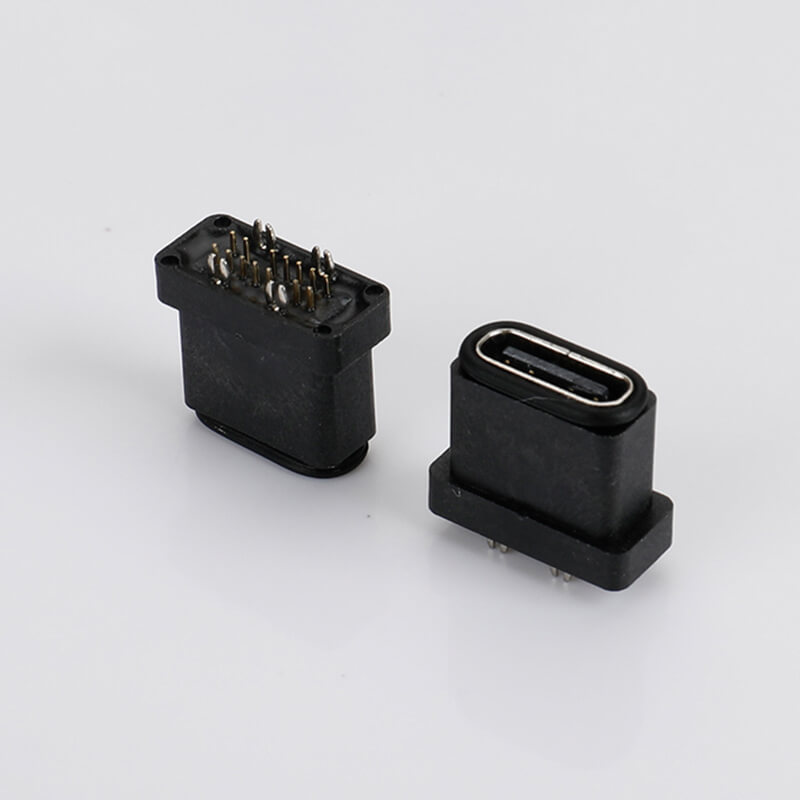
Features of USB Type-C Connectors
Feature 1: Type-C connectors support a “reversible plug” function, allowing insertion from either side, and can withstand 10,000 repeated insertions and removals.
Feature 2: Type-C connectors achieve a maximum data transfer speed of 10 Gbit/s, which is also the standard for USB 3.1.
Feature 3: The size of the Type-C connector receptacle is approximately 8.3mm × 2.5mm, featuring a slim design.
Feature 4: Standard specification cables equipped with Type-C connectors can carry 3A of current, and also support “USB PD” (USB Power Delivery), which exceeds existing USB power capabilities, providing up to 100W of power.
1. Versatile: The USB Type-C port on the new MacBook can transmit data, interrupt charging, and also serve as a video output port to connect external display devices.
2. Fast: Theoretically, the maximum transfer rate of a USB Type-C connector port is 10 Gbps. However, Apple states that the maximum transfer rate of the new MacBook's USB-C port is 5Gbps. The maximum output voltage is 20 volts, which can speed up charging time. In contrast, USB-A type, so far, has a maximum transfer rate of 5Gbps and an output voltage of 5 volts.
3. Backward Compatibility: USB Type-C connectors can be compatible with older USB standards, but users need to purchase additional adapters to achieve compatibility.
4. Bidirectional: Unlike older USB ports where power could only be transmitted in one direction, power transmission in USB Type-C connector ports is bidirectional, meaning it can have two power transmission modes. Therefore, users can not only charge mobile devices with their laptops but also use other devices or power banks to charge their laptops.
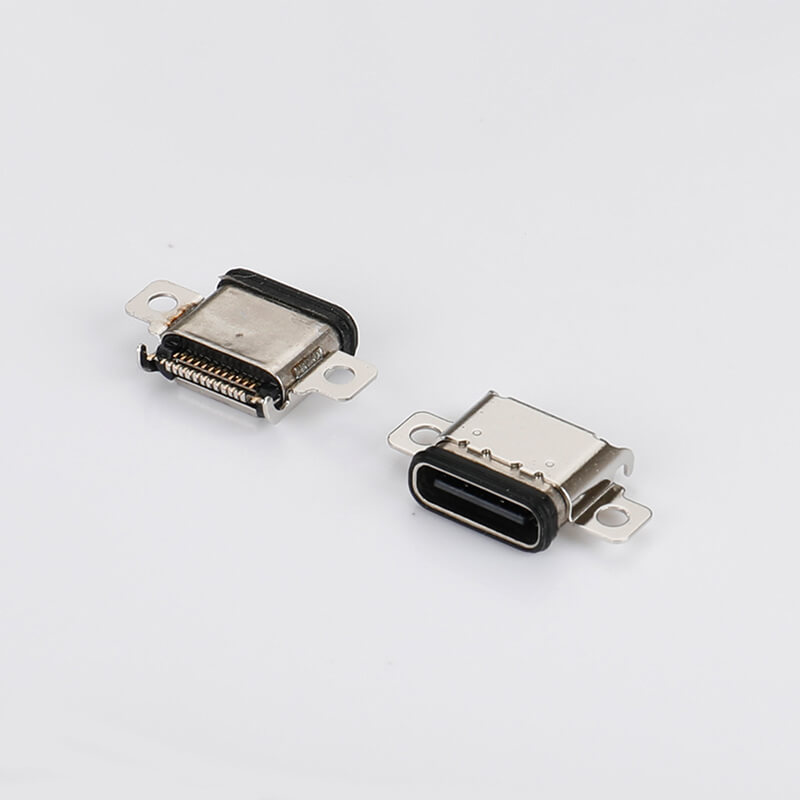
Type-C Connector Manufacturing Process
1. Stamping: This part includes stamping of the outer shell and stamping of the USB terminals. The terminals are the core components of the USB connector and are the parts that come into contact with the Type-C male or female connector. The quality of the terminal material directly affects the performance parameters of the finished product. Type-C connector terminals are usually stamped from thin copper strips. One end of a large roll of copper strip is fed into the front end of a high-speed stamping machine, and the other end passes through the hydraulic workbench of the stamping machine and is wound into a take-up reel. The take-up reel pulls out the copper strip and rolls it up to produce the finished stamped product.
2. Electroplating: After the terminals are stamped, they proceed to the electroplating stage. In the electroplating stage, the contact surfaces or shells of various connectors will be plated with various metal coatings according to the type and purpose of the product.
3. USB Connector Plastic Core Injection Molding: The plastic core injection molding of USB connectors is the process of injecting high-temperature molten PBT or LCP plastic into a metal mold, and then rapidly cooling it to form the shape.
4. Assembly: The last process is assembly. Company employees continuously and rapidly assemble the semi-finished products produced in the previous processes using high-speed terminal assembly machines to form finished products.