

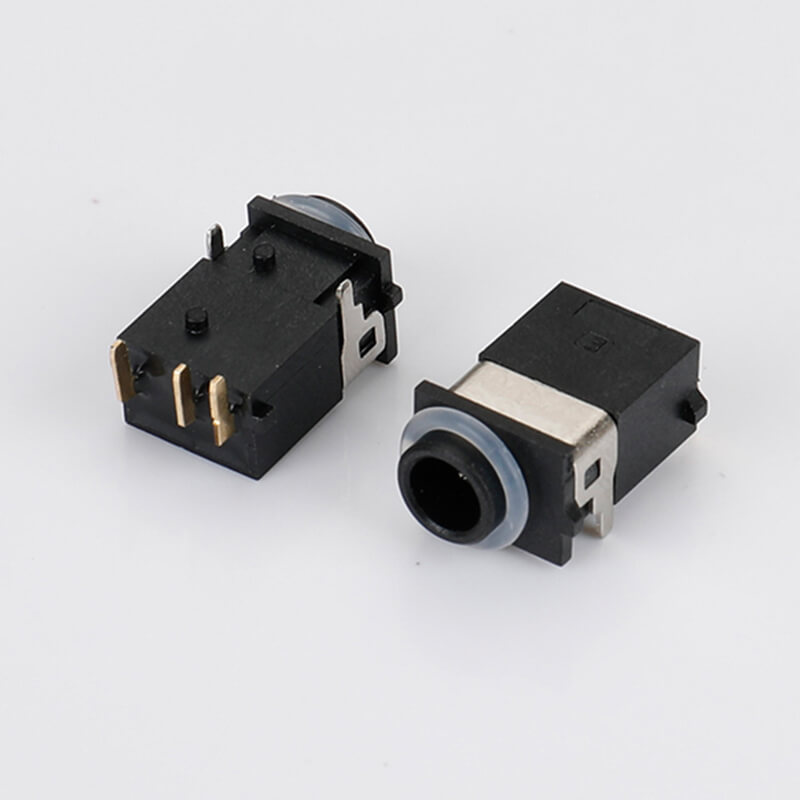
In the field of electronic devices, the waterproof DC socket, with its excellent waterproof performance, provides a strong guarantee for the stable power supply of all kinds of devices in complex environments. Its design is similar to that of a regular DC socket, but it has been upgraded in terms of waterproofing and shell material. It adopts special sealing materials and design to block the intrusion of water, and the shell is also made of corrosion-resistant and impact-resistant materials to protect the internal parts in all aspects. Here is a detailed introduction to the knowledge of waterproof DC sockets.
Types of Waterproof DC Sockets
● Classified by installation method
SMD waterproof DC socket
Suitable for highly integrated circuit boards, can effectively save space, to meet the demand for miniaturisation of modern electronic products.
DIP waterproof DC socket
Suitable for circuit boards that need to be mounted through holes, solid installation, commonly used in equipment with high stability requirements.
Panel Mount waterproof DC socket
Is between the SMD and inline mounting method, can meet the specific installation needs, of different equipment designs to provide more choices.
● Classification by Centre Pin Diameter
According to the diameter of the centre pin, waterproof DC sockets are classified into 0.5mm, 0.7mm, 1.3mm and other specifications. The different diameters of the centre pin are designed to fit the interface of different equipment to ensure a tight connection between the plug and socket, and to guarantee the stability of power transmission.
● Classification according to rated current
Waterproof DC sockets are classified into 0.5A, 1A, 2A, 3A and so on according to the rated current. Different devices have different power requirements, choose the right rated current socket to ensure the normal operation of the equipment, to avoid damage to the equipment due to insufficient or excessive current.
● Classification according to rated voltage
According to the rated voltage, waterproof DC sockets have 3V, 5V, 12V and other specifications. Ensuring that the rated voltage of the socket matches the required voltage of the equipment is the key to guaranteeing the safe operation of the socket within a specific voltage range, and is also an important prerequisite for the protection of the equipment and the safety of the user.
● Classification according to the number of terminals and contact shape
From the point of view of the number of terminals and contact shapes, waterproof DC sockets are available in single-terminal, double-terminal, multi-terminal and other types, and the contact shapes include round, flat, rectangular and so on. Different terminal numbers and contact shapes meet the circuit connection needs of different devices and enrich the application scenarios of waterproof DC sockets.
Precautions for the use of waterproof DC socket
1. Selection and Adaptation
Be sure to choose the waterproof DC socket model and specifications that meet the requirements of the equipment, from the installation method to the electrical parameters should be precisely matched, otherwise, it may lead to equipment not working properly or even damage.
2. Environmental protection
During use, avoid exposing the socket to a humid and dusty environment. Moisture and dust will affect the performance of the socket, shorten its service life, reduce the waterproof effect, and may also cause circuit failure.
3. Plugging and unplugging specifications
When inserting and removing the DC plug, operate gently. Excessive force or repeated insertion and removal will easily damage the waterproof DC socket and equipment interface, destroy the waterproof structure of the socket, and thus affect its waterproof performance and overall quality.
4. Regular Inspection
Regularly check the conductivity, insulation and high-temperature resistance of the waterproof DC socket. Through inspection, potential problems can be found in time to ensure that the sockets are always in good working condition and ensure the stable operation of the equipment.